In the late 1980s scientists at the Bermuda Institute of Ocean Sciences (BIOS) were looking for a way to meaningfully contribute to the Joint Global Ocean Flux Study (JGOFS). This international program involved the creation and maintenance of monitoring stations around the world, each collecting vast amounts of data on dissolved carbon in the ocean and carbon dioxide in the atmosphere. BIOS was already home to Hydrostation S (an ocean data time-series station established in 1954), but the scientists envisioned a time-series station that could provide long-term measurements from the open ocean off Bermuda.
The Bermuda Atlantic Time-series Study (BATS) Celebrates A Quarter Century of Science
November 27, 2013

Bait and See
July 25, 2015
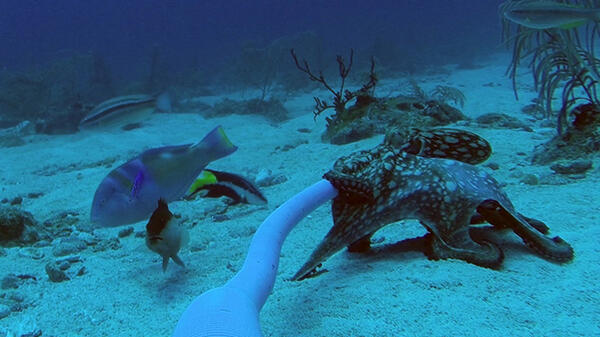
Tim Noyes, a coral reef research specialist at BIOS, knew he wanted to take action fighting the scourge of lionfish invading Bermuda’s coral reefs. He was helping out with a short documentary to raise awareness about these voracious predators when he came up against a vital question that captured his interest as a scientist: what, exactly, were the lionfish eating in Bermuda?
From the R/V Atlantic Explorer to Alpacas: A Conversation with BIOS Marine Superintendent Ron Harelstad
July 28, 2015

As marine superintendent of BIOS’s 170-foot research vessel Atlantic Explorer, Ron Harelstad is responsible for planning and scheduling when and where the ship is used, identifying new ship users, budgets, regulatory compliance, and personnel management. In addition, Harelstad manages four National Science Foundation grants that provide financial support of the vessel.
Lionfish Tournament Draws More Than 600 People to BIOS
July 29, 2015

The 5th Annual Groundswell Lionfish Tournament took place at BIOS on July 18, and saw the tournament kicking off at sunup and boats heading in to the BIOS dock for the 3.00pm weigh-in. See story and photos at Bernews.com.
Two New Gliders Arrive at BIOS
July 30, 2015

Two new underwater gliders arrived at BIOS in mid July and are expected to be gathering data in the waters around Bermuda by the end of the summer. The gliders, each resembling a 6-foot-long airplane, operate on battery power at sea with direction from land-based researchers while carrying a payload of sensors that measure ocean properties such as salinity, temperature, oxygen, nutrients, and currents.
Three Months in Bermuda: A Springboard to Success
January 26, 2018

For many students, especially during their undergraduate college years, the difference between thinking about potential careers and knowing what career they want to pursue boils down to one thing: experience.
Berkeley Students Create BIOS Virtual Tour
January 15, 2014

The PartnerRe “Dollars for Hours: Youth & Community in Partnership” program recently celebrated its eighth year of matching students from local schools with local charities to work on a variety of community projects. Under this unique partnership, each participating school receives $30,000 to be put toward classroom upgrades, scholarship funds, IT equipment, and other infrastructure projects and student support programs.
From Bermuda Program Participant to Medical Doctor
January 26, 2018

Since the inception of the Bermuda Program in 1976, more than 150 young Bermudians have taken part in the annual summer internship at BIOS, and many apply their experiences toward university studies in science, as well as science-based careers.
The Next Generation of Coral: What Can It Teach Us?
January 26, 2018

“How resilient are coral reefs to global climate change?”
A Publication for a Bermuda Program Alum
February 26, 2018

A former intern with BIOS’s Bermuda Program had his research on rain and flooding events in Bermuda selected last month for publication in a British meteorology journal. Michael Johnston’s paper appeared online January 18 with the Royal Meteorological Society, a professional group focused on weather and climate.