


Each spring, BIOS is one of more than 350 colleges, universities, medical centers, professional organizations, and research institutions that accepts undergraduate students as part of the National Science Foundation (NSF) Research Experiences for Undergraduates (REU) program. For more than 30 years, the REU program has given U.S. students the opportunity to conduct hands-on research in science, technology, engineering, and mathematics (STEM) fields as part of their undergraduate education.
Canadian Students at BIOS Finish Successful Research Internships
January 29, 2019

Since its inception in the 1970s, the Canadian Associates of BIOS (CABIOS) program has provided more than 200 Canadian students and young scientists with financial assistance to pursue marine science and oceanographic research internships, as well as support for hundreds of students to complete academic coursework at BIOS. Founded by Earlston Doe, a former BIOS Life Trustee and Canadian oceanographer born in Bermuda, the CABIOS fund honors the memory of his youngest son Learmont “Leary” Doe.
Students Fly South for the Winter
February 26, 2019

As college education becomes as much about experiential learning outside the classroom as it is about lectures, labs, and study halls, many schools have begun to adopt what is known as the “4-1-4” academic calendar. In this system, students have a 4-month semester, then a 1-month “intersession” or “mini session,” followed by another 4-month semester. This offers students a variety of opportunities during this January term, including study abroad programs, internships, undergraduate research, and independent study.
Collaboration Benefits Island’s Students
February 26, 2019

A novel partnership between BIOS’s Ocean Academy and the University of Delaware (UDel) this winter gave dozens of local teachers and students the opportunity to learn about marine robotics and how they are used to explore the oceans.
Calling All BIOS Volunteers
March 29, 2019

Like to snorkel? Interested in supporting emerging marine engineers? Volunteers from BIOS and the Bermuda community are needed to assist on Saturday, April 27 from 8:00a.m. to 3:00p.m., as more than 30 teams of school students test their mission-tasked Remotely Operated Vehicles (ROVs) during the annual island-wide robotics challenge.
An Environmental Engineering Challenge, with a Twist
March 29, 2019
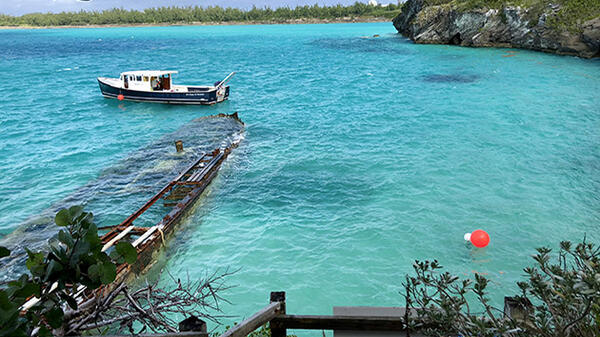
How could a group of 15 students from diverse cultural and socioeconomic backgrounds—and separated by hundreds of miles— work together to address a real-world ecological issue? That’s what a team of educators is set to find out with new funding from the National Geographic Society.
The Next Generation of Scientists Begin Work at BIOS
June 28, 2019

Each year a handful of Bermudian students are selected to participate in the BIOS Bermuda Program. This program, which began in 1976, offers students aged 18 and older the opportunity to broaden their knowledge of marine and atmospheric sciences by working on a specific project of interest alongside BIOS scientists in both field and laboratory settings.
Building a STEM Pipeline for Bermuda’s Students
June 28, 2019

Both BIOS and Bermuda College are known for providing outstanding educational opportunities in science, technology, engineering and mathematics (STEM) subjects for the island’s young people. While the Bermuda College is a degree-granting institution and BIOS is a not-for-profit research and education facility that focuses on training local students in primary, middle, and high school, both organizations have a similar goal: to provide the island’s children and young adults with the knowledge, skills, and experiences required for future success in academics and the workforce.
A Joint Effort on the High Seas
June 28, 2019

Late last month, a four-day research cruise on the Sargasso Sea gave two local educators and a senior school student the opportunity to gain unique insight into what it means to live and breathe science aboard a working research vessel. The cruise was part of a project funded by the National Science Foundation (NSF) investigating the daily migrations of small marine zooplankton called copepods.
How Do We Understand the Ocean?
July 25, 2019

This summer marks the third year that BIOS has offered its Modern Observational Oceanography (MOO) course to undergraduate and postgraduate students enrolled in oceanography programs. The course aims to provide students with a broad introduction to, and practical experience in, the field of observational oceanography—a rapidly developing area of study that focuses on using a variety of technologies and methods to further our understanding of how the physical state of the ocean is changing.