


Earlier this year, Leocadio Blanco-Bercial, a zooplankton ecologist at BIOS, was awarded funding from the National Science Foundation (NSF) for a three-year investigation to determine how environmental variables, such as temperature and oxygen, influence the structure of zooplankton communities found within the ocean’s twilight zone (depths between 650 to 3000 feet, or 200 to 1000 meters), also known as the “midwater.”
Small but Mighty…and Seasonal!
July 29, 2020

Earlier this year, BIOS associate scientist and zooplankton ecologist Leocadio Blanco-Bercial published a paper in the scientific journal Frontiers in Marine Science that sheds light on zooplankton communities in the Sargasso Sea, where zooplankton diversity is among the highest in the world’s ocean.
Don’t Let Their Size Fool You
November 25, 2019

For nearly a hundred years, scientists have known that plankton—the microscopic organisms that drift and float in the ocean, also known as marine microbes—form the basis of the ocean’s food web. Phytoplankton (literally “plant wanderers”) are photosynthetic, like their terrestrial counterparts, and convert sunlight into energy. Phytoplankton, in turn, are consumed by zooplankton (literally “animal wanderers”), as well as a host of larger marine organisms, including juvenile fish, shellfish, birds, and even whales. However, scientists are now learning that plankton play an even larger role in earth’s complex biogeochemical systems.
A Team Tackles a Troublesome Fish
March 27, 2018
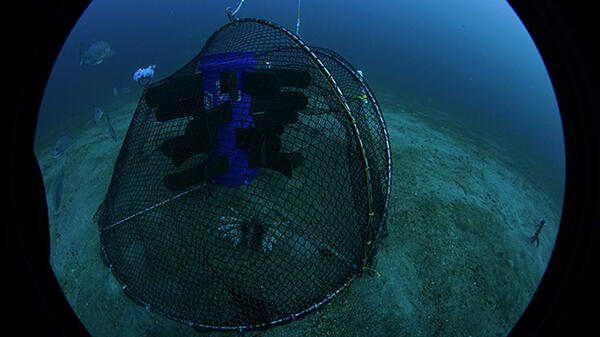
It is often said that good things come in groups of three, and that might be the case for a trio of research projects aimed at reducing a recent, but growing, threat to Bermuda’s marine biodiversity: the invasive lionfish.
Scientist at Work: A Conversation with BIOS Biologist Leocadio “Leo” Blanco-Bercial
March 30, 2015

Leo Blanco-Bercial grew up fishing for mackerel and tuna off the coast of his native Spain, but for his career has gravitated to studies of the tiniest of marine organisms: plankton. Blanco-Bercial, 36, began work at BIOS in January with the intention of continuing his plankton studies, specifically their genetics. He also plans to continue educating his Europe-based family, he said. “During visits home, I like explaining how plankton nourish the fish that we love catching and eating.”
Cave Research Aided by a Robotic Helper
February 27, 2020

The rare and ancient microorganisms that live in Bermuda’s submerged caves intrigue BIOS marine ecologist Leocadio Blanco-Bercial, but venturing into these dark, remote spaces to document and retrieve samples is often logistically difficult, not to mention dangerous. When a colleague mentioned a grant for a portable underwater robot that Blanco-Bercial could instead steer into narrow crevices and twisting tunnels to gather microbe samples and take photos, he set to work on an application.